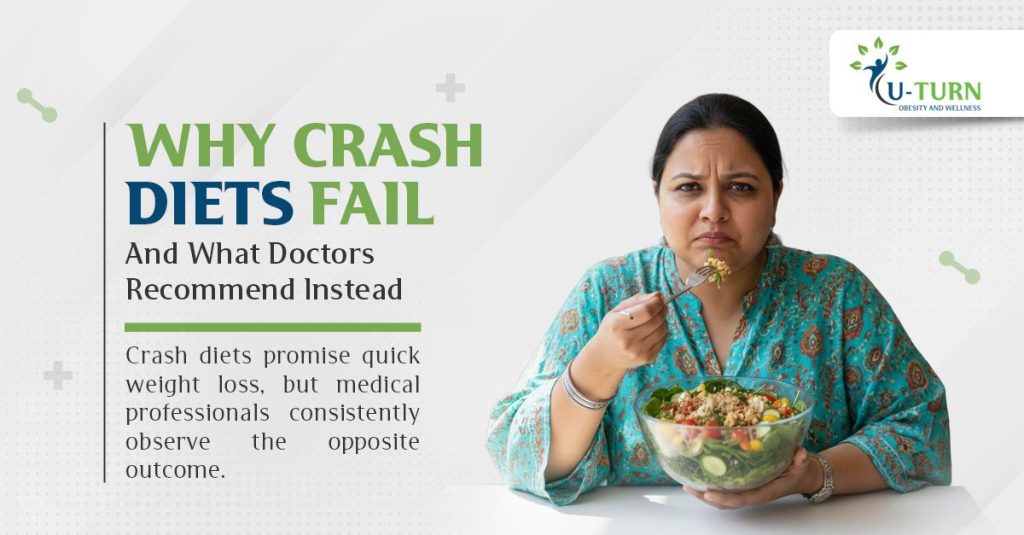
Crash diets promise quick weight loss, but medical professionals consistently observe the opposite outcome. Patients often experience initial weight reduction followed by fatigue, nutrient deficiencies, metabolic slowdown, and eventual weight regain. At healthcare-led practices like U UTRN, many individuals seek help after extreme dieting has negatively impacted their health.
Why Crash Diets Don’t Work
Crash diets involve severe calorie restriction, which forces the body into a stress response. To conserve energy, the body reduces its metabolic rate. This leads to:
Loss of muscle mass, which further lowers metabolism
Hormonal imbalance, increasing hunger and cravings
Reduced nutrient intake, affecting immunity, skin, hair, and overall energy
Poor long-term adherence, making weight regain likely
Rapid weight loss primarily comes from water and muscle, not sustainable fat loss. Once normal eating resumes, the body stores fat more efficiently, leading to rebound weight gain.
What Doctors Recommend Instead
Doctors focus on metabolic stability and long-term nutritional balance rather than extreme restriction. Medical recommendations typically include:
- Restoring Metabolic Function
Addressing insulin sensitivity, digestion, and hormonal balance before targeting weight reduction. - Structured, Balanced Nutrition
Clinically designed meal plans that provide adequate protein, fibre, and essential nutrients while supporting fat loss. - Gradual Weight Reduction
Slow, consistent progress allows the body to adapt without triggering metabolic or hormonal stress. - Individualised Medical Oversight
Health history, lifestyle, and physiological responses are considered to ensure safe and effective outcomes.
A Sustainable Approach to Weight Management
Long-term weight management depends on maintaining metabolic health, preserving muscle mass, and supporting the body’s natural balance. Medical, evidence-based approaches consistently deliver better outcomes than crash diets, without compromising overall health.