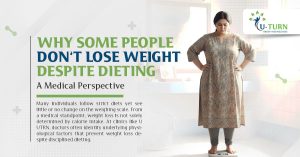
Many individuals follow strict diets yet see little or no change on the weighing scale. From a medical standpoint, weight loss is not solely determined by calorie intake. At clinics like U UTRN, doctors often identify underlying physiological factors that prevent weight loss despite disciplined dieting.
Metabolic Adaptation and Slow Metabolism
Repeated dieting or prolonged calorie restriction can cause the body to adapt by lowering its metabolic rate. This survival mechanism reduces energy expenditure, making fat loss increasingly difficult even when food intake is controlled. In such cases, the body becomes efficient at conserving calories rather than burning them.
Hormonal Imbalances
Hormones play a critical role in weight regulation. Conditions such as insulin resistance, thyroid dysfunction, cortisol imbalance, and polycystic ovarian syndrome (PCOS) can significantly hinder fat loss. These imbalances affect how the body stores fat, manages hunger, and utilizes energy, often making standard diets ineffective.
Loss of Muscle Mass
Inadequate protein intake and extreme dieting can lead to muscle loss. Since muscle tissue supports metabolic activity, its reduction further slows metabolism, limiting weight loss and altering body composition even when weight appears unchanged.
Gut Health and Nutrient Absorption
Poor gut health can impair digestion, nutrient absorption, and metabolic efficiency. Imbalances in gut bacteria have been linked to increased fat storage, inflammation, and difficulty losing weight despite dietary control.
Inflammation and Stress Response
Chronic inflammation and elevated stress hormones, particularly cortisol, can promote fat storage, especially around the abdominal region. High stress levels also interfere with sleep quality, further disrupting metabolic balance.
A Clinical Understanding of Weight Loss
From a medical perspective, effective weight management requires identifying and addressing these underlying factors. Weight loss is a complex biological process influenced by metabolism, hormones, muscle mass, and overall health — not just willpower or calorie counting.